While the pathos of this image may invoke panic at the thought of a mysterious alien visitor might scare us at first, the other parts of the "photo" fall kind of flat. As far as ethos is conserned, there is not much credability, seeing as the photo was probably taken by some unknown ameture who knows nothing about basic things like focus, (not to mention I got the picture off a website catogorized as "Alternative spirituality/ occult," which aren't exactly words that scream "Reliable". And as far as logos goes, while it's up to debate weather or not we are alone out there, what isn't debatable is the existance of photoshop, which could eisily make pictures fake ufo pictures that look much more realistic than this.
Wednesday, August 31, 2011
UFO picture thesis.
While the pathos of this image may invoke panic at the thought of a mysterious alien visitor might scare us at first, the other parts of the "photo" fall kind of flat. As far as ethos is conserned, there is not much credability, seeing as the photo was probably taken by some unknown ameture who knows nothing about basic things like focus, (not to mention I got the picture off a website catogorized as "Alternative spirituality/ occult," which aren't exactly words that scream "Reliable". And as far as logos goes, while it's up to debate weather or not we are alone out there, what isn't debatable is the existance of photoshop, which could eisily make pictures fake ufo pictures that look much more realistic than this.

Tuesday, August 30, 2011
Heinekin coliseum ad not so brilliant.

In this ad, we clearly see an arrangement of Heinekin brand beer bottles arranged into a structure that looks like the roman coliseum with the words, “History is made in Rome,” at the top. This ad is trying to associate the fact that it was made in Rome with the mighty Roman empire, making anyone who drink it feel mighty and special through association. But does this approach work completely, or will some people actually be turned off by the image that is intended to sell their product.
The immediate rhetoric tool we see here is ethos. By making the stack of beers look like the coliseum, (arguably the most famous and recognizable structure in Rome Italy,) we automatically know that the beer comes from a great place, rather than showing a picture of a regular factory or a run-of-the-mill distillery.
This also ties into the pathos of the advert. By associating Heinekin with the strongest reminder of the Mighty Empire of Rome, we get the feeling of power, something all of us struggle with and want somewhere inside.
Using logos, we draw the conclusion that by drinking this beer, we too, can feel like an emperor of a kingdom! Just look at the majesty of the image! Doom and gloom clouds surround the structure, but from the middle of the building, a pillar of light spews out, splitting the heavens themselves! Surely this captures the might of the Heinekin beer product!
Well, it might, had the advertisers considered kairos. While the Roman Empire may be associated with might, the coliseum has a different meaning entirely. For the few of you who don’t know, the coliseums were Roman sports arenas…where millions were SYSTEMATICALLY MURDURED FOR THE PURPOSE OF SHEER ENTERTAINMENT!!! Had this ad been published back in the year 100 B.C., this might have had a positive effect on an audience of Roman citizens, who enjoyed these games quite often. Nowadays, though, that kind of stuff just doesn’t fly. When we see the coliseum, we aren’t reminded of power or victory, we’re reminded of bloodshed and genocide! When I first saw this, I didn’t think it was advertising beer, I thought it was a PSA about how many lives are taken by beer, as if to say, “More people have died in car accidents caused by alcohol than died in the gladiator games!”
To add to this, the Heinekin logo is small and neatly tucked into the corner, where it’s cool greed color blends in nicely with the brooding dark-blue background, so there’s a chance someone just passing by this logo won’t even know about the brand name if they don’t take a closer look.
So all in all, we are given an image associated with the most barbaric sport in the world, and a message that, weather intentionally or not, links your product to certain death. This pretty much ensures that anyone who sees your advert is likely to not want to drink beer at all, let alone your brand specifically. But hey, at least they won’t be buying from your competitors.
Thursday, August 25, 2011
The Atraction of Images.
Unless you're blind, you see images every day. From the Television, to the billboards on the side of the road, to the faces of your friends as you talk. But I noticed there is one large difference between the blue valley on your motivational poster and the run-down creek in the woods behind your house. Chances are, one is much prettier.
Okay, most people know that images used for advertising are much more embellished than the actual products they represent, and even if no deceptive image-tricks are used, you can bet they only capture the cream of the crop on camera. But to be fair, which would YOU buy?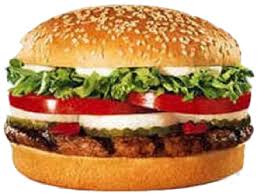
 (Pictures taken off of blog.skimkim.com and grubgrade.com respectively.)
Pictures are always more attractive in advertising than in real life, right? Well, maybe not always. Sure we're all familiar with the scantily clad models trying to sell us cars,
 (image from Ioqu.com)
But what about this sexy migraine lady? (Image from kashmirmonitor.org)
She's not hideous, no, but she's definitely no supermodel. So if all images in ads are supper pretty, why does stuff like this appear every now and then?
Well, the point of an ad is to make the customer want to buy your product, usually by making the product seem better than it is. Most ads do this by making the image your looking at more "sexy." This tells the viewer, "if you drive our car, you too can have gorgeous women like this," or, "buy Burger King, all our hamburgers look this delicious," when in reality your likely to get a chunk of plastic-looking meat and your fat ass is never going to attract any supermodels unless your already very rich, (in which case, you probably don't need the car.)
In some ads, however, it's more important to identify with the customer on a personal level. The migraine ad wants you to think it can bring YOU relief, not that skinny bimbo your husband is likely ogling at. No, you HATE her, and secretly enjoy watching her suffer. So, the migraine ad uses a more average, down to earth looking person, someone you can identify with.
So, as you can see, not ALL advertising contains images that would lead us to believe we're living out a scene from "The Uglies." Some need a down-to-earth apeal, and will use pictures that accommodate this allusion.
Okay, most people know that images used for advertising are much more embellished than the actual products they represent, and even if no deceptive image-tricks are used, you can bet they only capture the cream of the crop on camera. But to be fair, which would YOU buy?
Pictures are always more attractive in advertising than in real life, right? Well, maybe not always. Sure we're all familiar with the scantily clad models trying to sell us cars,
But what about this sexy migraine lady?
She's not hideous, no, but she's definitely no supermodel. So if all images in ads are supper pretty, why does stuff like this appear every now and then?
Well, the point of an ad is to make the customer want to buy your product, usually by making the product seem better than it is. Most ads do this by making the image your looking at more "sexy." This tells the viewer, "if you drive our car, you too can have gorgeous women like this," or, "buy Burger King, all our hamburgers look this delicious," when in reality your likely to get a chunk of plastic-looking meat and your fat ass is never going to attract any supermodels unless your already very rich, (in which case, you probably don't need the car.)
In some ads, however, it's more important to identify with the customer on a personal level. The migraine ad wants you to think it can bring YOU relief, not that skinny bimbo your husband is likely ogling at. No, you HATE her, and secretly enjoy watching her suffer. So, the migraine ad uses a more average, down to earth looking person, someone you can identify with.
So, as you can see, not ALL advertising contains images that would lead us to believe we're living out a scene from "The Uglies." Some need a down-to-earth apeal, and will use pictures that accommodate this allusion.
Subscribe to:
Posts (Atom)